- Online Art Gallery
- Buy Art Online
- Wall Paintings
- Art Marketplace
- Worldwide Shipping


Art of Modern Paintings
May 13, 2022
0 comment(s)
What is the Art of Modern Paintings?
modern paintings are a new form of art where the artists portrayed the real pictures of societies through artworks using new methods, materials, and visions, which they considered to be more useful in a better reflection of hopes and realities of contemporary societies by throwing the tradition of the past aside. Before the origin of modern painting, traditional art was used to document, tell a narrative, or capture a moment in space and time based on reality. After the beginning of a modern painting, art was not only confined or restricted to capturing or documenting true reality, rather modern artists expanded reality to different extents by using radical, new styles and techniques of painting. Traditionally artists, before the 19th century created artwork based on religious themes and wealth. They always portrayed artworks for church and wealthy people and were paid for by wealthy people. In the 18th century, modern artists started creating artworks based on their choice of subject matter, this provided the artist with an opportunity to portray a wider view of society in their artworks and allowed them to reflect on the social, political, and economic situation of their contemporary societies and make their comments on it through their artworks. Modern painting also allowed artists to portray different scientific and technological subjects in their paintings. Modern painting is important because it has an essential role in provoking the emotion and independent thoughts of the artist to portray and reflect the changes in society, science, and our lives through artworks, which provides the audience an opportunity to embrace new ideas from it. It is important to know who is the father of modern painting, how it works, and how long it lasted as a famous genre of Painting, let’s discuss this one by one.
The Key Themes
Styles of Modern Painting: Styles of modern paintings are Impressionism, Post-Impressionism Fauvism, Cubism, Expressionism, Surrealism, Abstraction, De Stijl, Die Brucke, De Blaue Reiter, Bauhaus, Art Deco, Art Nouveau, Neo-Impressionism, Futurism, Art Brut, Dada, Pop Art, Abstract Expressionism, Mexican Muralism, Japonism, Brutalism and Harlem Renaissance.
The Period: Modern painting is originated in the 1860s and lasted till the 1970s. The modern painters created artworks enriched with modern styles to reflect the condition of society.
The Founder of Modern Painting: French painter, Édouard Manet is considered as the first modern painter, who painted his very first modern painting named Le Déjeuner Sur l'Herbe (Luncheon on the Grass) in 1863 that was exhibited in Salon des Réfusés in Paris.
Modern Painting in Today’s World: Modern paintings exist in various forms in different museums and art galleries all over the world. Modern art is used for scientific purposes in the present world. Three-dimensional art is more appealing in the galleries in the present world, there can be differences in size, color, texture, etc. in modern paintings but they are portrayed to reflect society.
Why Modern Paintings are Important? Modern paintings are important because they reflect society's changes and enable people to creatively give their opinions on them. The second reason for which modern paintings are considered very important is their appeal to the emotive side of human beings.
10 Most Famous Modern Paintings of 21st century
10 most famous paintings of the 20th century are;
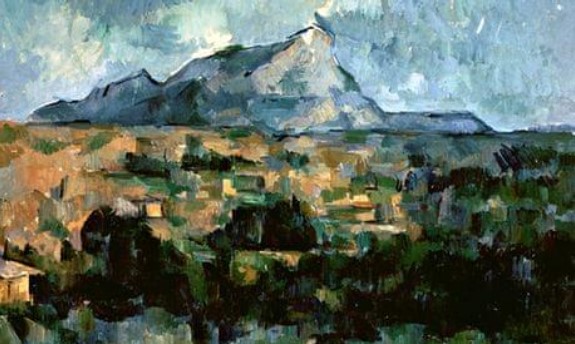
Paul Cézanne – Mont Sainte-Victoire (1902)
At the beginning of the 20th century, Paul Cézanne painted a mountain named Mont Sainte-Victoire that is situated in southern France overlooking Aix-en-Provence. Paul Cézanne made almost 30 oil paintings and watercolors in his life but this is the most remarkable and famous painting of Paul Cézanne. The name of this mountain means “Mountain of Holy Victory,” it is about 3,317 feet high and steeped in local and personal lore. Paul Cézanne made this painting because he was frustrated with Impressionism and wanted to add something new and solid to it.
Pablo Picasso painted Les Demoiselles d'Avignon in 1907. This painting was originally titled Le Bordel d’Avignon which means The Brothel of Avignon. Les Demoiselles d'Avignon is one of the most influential paintings of the 20th century due to its prominence in the development of Cubism and Modern Art. The painting is not only prominent for use of different styles but also its subject. The title Avignon refers to a street in Barcelona that is popular for its brothel. Picasso made this painting because he was having an intense desire to take the place of Henry Matisse at the center of modern canvas painting.
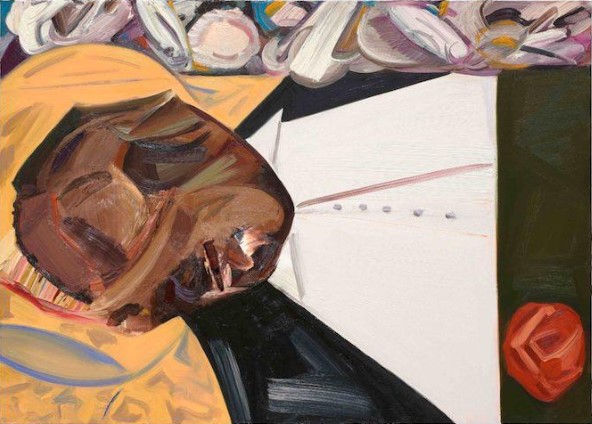
You are aware of the agony. Every print and online art publication covered it, and there were several essays and op-eds written about it by national and international artists, art professors, and museum directors. However, if you contacted your Facebook uncle about it, it's possible that it didn't register with him. What makes the painting questionable is very much a part of our political atmosphere, and while it induced a real ruckus in the art world, the names associated with it (Schutz, the Whitney Biennial) may not have enough acceleration to uplift the issue into the general pop-culture scenery, which has little time for detail or connotation. (However, the dialogues and disputes around the artwork were stirring and persistent for an art-world worry.)
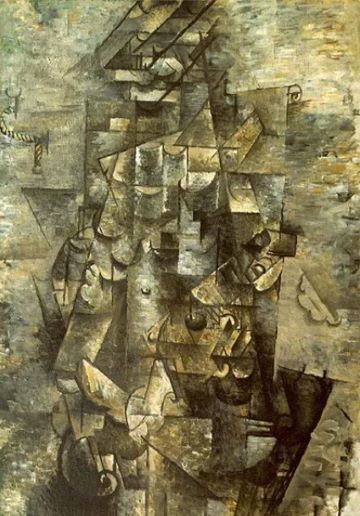
Georges Braque – Man With a Guitar (1911-1912)
French artist, Georges Braque created this painting in Analytic Cubism style in 1912 and named it ‘Man with a Guitar’, this is considered as one of the best paintings in modern painting. Man with a Guitar is displayed in the Museum of Modern Art in New York. The government of France seized this painting in World War I and sold it to in Museum of Modern Art in 1945. Another strange act to this painting is that it is not signed on the front, but signed on the back by Braque. This was done deliberately to remove the tradition and mystique of the artist. Braque and Pablo Picasso developed this painting together.
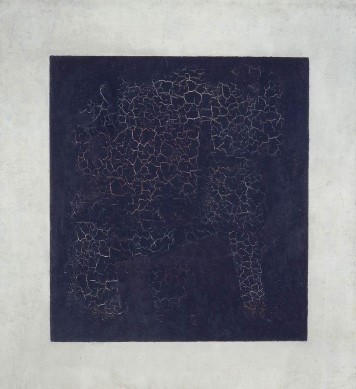
Kazimir Malevich – The Black Suprematist Square (1915)
The Black Suprematist Square was painted by Kazimir Malevich in 1915 during World War I, though he expressed his idea of painting it in 1913. At first, it was believed that this painting is not intended to express any symbolic meaning and its purpose is to solve artist problems but later on it turn out to be a very complex painting and only people with greater knowledge of color and art were able to understand it. The black square is not parallel to the frame so it is not a square, similarly, the color is not black but a mix of different colors. This painting was exhibited in The Last Futurist Exhibition in 1915.
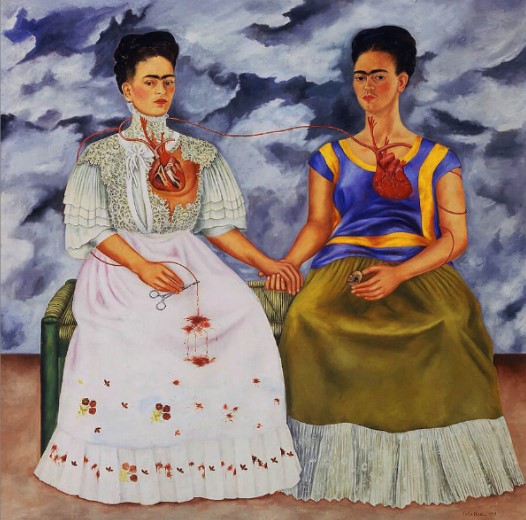
Frida Kahlo – The Two Fridas (1939)
This painting was painted by Kahlo Frida in 1939 and was named The Two Friday. Kahlo Frida completed this painting after she got a divorce from her husband Diego Rivera. For this reason, it is believed that Frida made this painting to reflect the two stages of her life, one before her divorce and another after her divorce.
The Persistence of Memory was painted by Salvador Dali in 1931. This painting was first exhibited in Julien Levy Gallery in 1932. Then in 1934, an anonymous donor took the painting to 1934 the painting to the Museum of Modern Art in New York City.
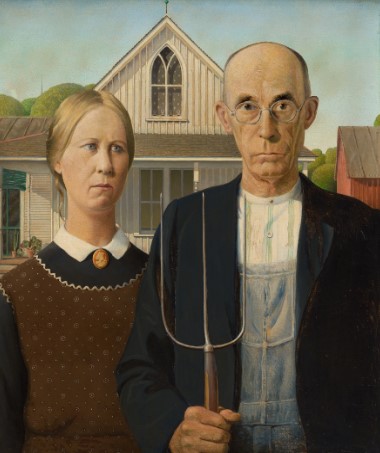
Grant Wood– The American Gothic (1930)
Grant Wood painted this painting in 1930 as a result of his inspiration from the American Gothic House in Eldon, where he fancied certain kinds of people should live. In the painting, a farmer is standing along with his daughter. The dress of women reflects the colonial period and ruler Americana of the 20th century. On the other hand, the man is dressed in a suit jacket and carries a pitchfork which reflects modernism. American Gothic is one of the prominent and most familiar images of 20th-century culture and art of America.
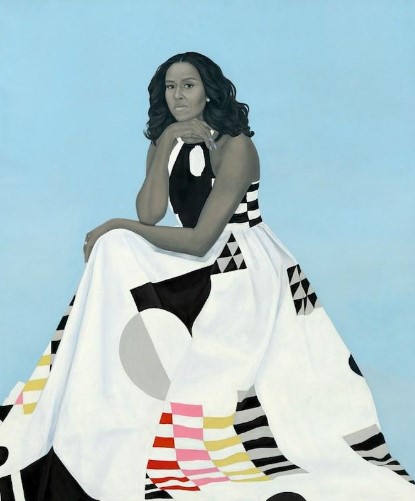
Amy Sherald’s official portrait of Michelle Obama
They were created by Kehinde Wiley and Amy Sherald (respectively). Again, massive art-world press coverage. And in this case, when they were revealed, they created a flurry of internet debate as well as a significant crossover into pop-culture static. It even drew racist Twitter trolls, something good art seldom does. Nevertheless, I would suggest that it was a provincial pop-culture moment, and by that I mean an exclusively American one, in that it only generated a stir in the United States and not elsewhere. I doubt that a Spanish football fan with no passion for art would have recognized the buzz surrounding these artworks.
Copyright © IndianArtZone. All rights reserved.