- Online Art Gallery
- Buy Art Online
- Wall Paintings
- Art Marketplace
- Worldwide Shipping


12 Famous Indian Painters of Modern Times

May 13, 2022
0 comment(s)
What is Indian Art?
Indian Paintings are a form of art in which artists of the Sub-continent created different sculptures, cave paintings, pottery, textile, etc. based on their traditional ways taught to them by their ancestors. Indian art was influenced by cultural and religious values and mostly the paintings were having religious themes. This thing made Indian art more prominent because every part of India offered different types of artistic styles based on the culture and religion of the people of that area. When did Indian art emerge and who was the father of Indian art? For how long was Indian art sustained and what styles were used in Indian art? These questions strike the mind of the reader after knowing what Indian art is. So, let’s discuss it briefly.
The Key Themes
The origin of Indian Art: Indian art was originated 3rd millennium BC and the founder of modern art is a French artist, Raja Ravi Varma is founder of modern art, and his artwork Scenes from the epics of Maha Bharat made him achieve recognition of being the father of Indian art.
The Period and Styles of Modern art: The period of Indian art can be divided into four parts which are the pre-historic period, the ancient period, the era of Islamic ascendancy, also known as the medieval period, and art from the colonial times. Different styles are used in Indian art based on different cultures and religions.
12 Famous Indian Painters of Modern Times Who Revolutionised Indian Art
-
Abanindranath Tagore: (1871 – 1951)
Abanindranath Tagore is one of the famous artists of modern times who had great contributions in revolutionizing Indian art. Abanindranath Tagore was the founding father of the Indian Society of Oriental Art. Abanindranath Tagore realized that Indian artists were influenced by the Western artistic works and they were losing interest in their Indian artistic styles, so, to draw the attention of Indian artists back towards their artistic styles, Abanindranath Tagore developed new artistic styles based on traditional Indian styles like Rajput and Mughal art by interpreting them in modern style.
Abanindranath Tagore also laid the foundation of the Bengal school of art. In 1895, Tagore displayed a blend of Indian and European artistic styles in his painting ‘Krishna-Lila series’. Abanindranath Tagore’s most prominent contribution in revolutionizing Indian art was his development of new artistic styles based on traditional Indian art through a modern interpretation of it, this style was later on accepted as the national style of Indian art and taught in schools. Abanindranath Tagore made many paintings in his life including, Bharat Mata, Illustrations of Omar Khayyam, Passing of Shah Jahan, Tales of Arabian Nights, The Call of the Flute, etc.

-
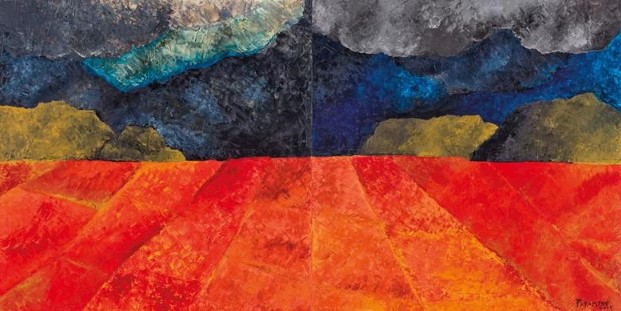
Akbar Padamsee: (1928– 2020)
Akbar Padamsee is one of the most famous Indian artists of modern times who had great contributions in revolutionizing Indian art. At the age of 20, Akbar Padamsee joined Progressive Arts Group and became the youngest member of PAG, who introduced and improved a combined style of traditional Indian and modern artistic styles. Akbar Padamsee’s famous works include an untitled watercolor painting, Man and Cityscape, Greek Landscape, Sun-Moon Metascape, Untitled photograph by Padamsee, etc. In 1910, Akbar Padamsee received Padamsee Bushan.
-
Amrita Sher-Gil: (1913– 1941)
Amrita Sher-Gil is one of the most famous Indian artists, who made great contributions to modern Indian art. Amrita Sher-Gil tried to combine the aesthetic of Ajanta Caves in Western India with oil painting styles of Europe. Due to completing graduation in Paris, Amrita Sher-Gil was highly inspired by Impressionists like Gauguin and applied their techniques to Ajanta Caves. Amrita Sher Gil became famous when she painted her first painting ‘Young Girls’ at the age of 19. Her other famous works include Three Girls, Bride's Toilet, The little girl in blue, Mother India, Ancient Story Teller, Hill Scene, etc.

-
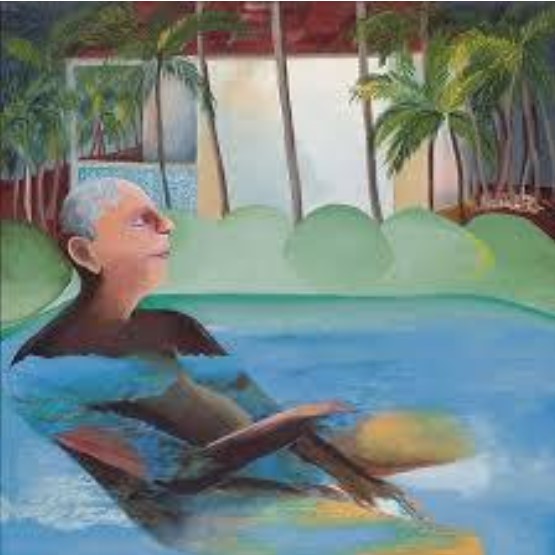
Bhupen Kakar: (1903 – 2003)
Bhupen Kakar is the most famous artist of modern Indian art. At the beginning of his career, he was an accountant but later on, he joined the Baroda group and became a painter. In his paintings, he portrayed the lives of middle-class people mockingly. Bhutan Khakar’s famous works include You Can’t Please All, Salman Rushdie, Man with Plastic Flower, etc.
-
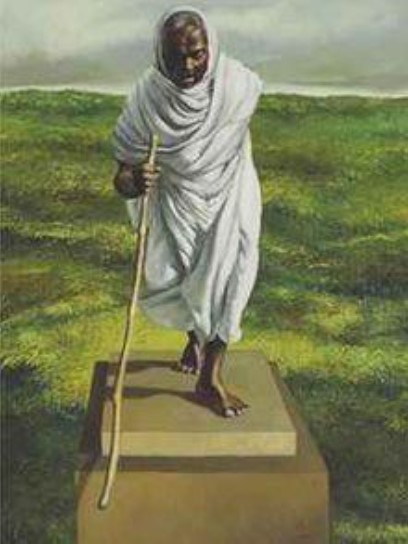
Bikash Bhattacharjee: (1940 – 2006)
Bikash Bhattacharjee is considered one of the famous Indian artists and pioneers of the modern Indian art movement. Bikash Bhattacharjee portrayed the life of middle-class Bengalis in his painting. Famous works of Bikash Bhattacharjee are Doll, Durga, An Evening, Bindu, The Trap, etc.
-
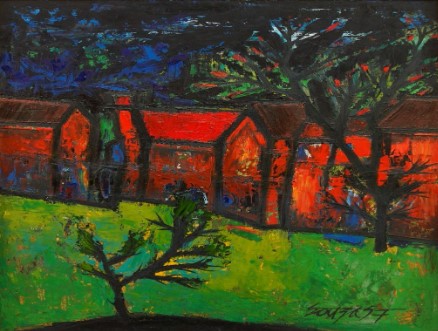
Francis Newton Souza: (1924– 2002)
Francis Newton Souza was one of the famous British Asian artists of modern Indian Art. He was one of the members of PAG, who laid the foundation of PAG in Bombay. Francis Newton Souza combined Expressionist artistic styles with Rajput artistic styles and developed a unique style. His famous works include Crucifixion, Two Saints in a Landscape, The Red Road, etc.
-
Jamini Roy: (1887– 1972)
Bengali artist Jamini Roy is one the most famous artist of modern Indian art. He was a student of Abanindranath Tagore. Jamini Roy created 2200 paintings throughout his life. He was the first artist who is awarded Lalita Kala Award. His famous works include Three Pujarins, Lady in a Pink Sari, Yashoda and Krishna, Krishna and Balaram,
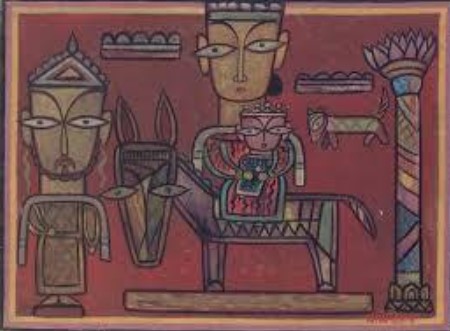
8. K.G.Subramanyan: (1924 – 2016)
K. G. Subramanyan was also one of the prominent figures in Indian modern paintings, who was a member of the Progressive Art Group in Bombay. He applied modern artistic styles to traditional folk art from Kerala and Pattachitra from Bengal. He was awarded Padma Vibhushan in 2012. His famous works are Seated woman, Parsi Couple, Fairytales of Purvapalli, terracotta-II, etc.

-
M. F. Husain: (1915 – 2011)
M. F. Husain is considered the most famous and prominent figure of Progressive Art Group, who laid the foundation. M. F. Husain painted paintings of Hindu goddesses due to which he was exiled from his country. M. F. Husain painted traditional Indian art by using modern artistic methods. His famous works are Horses, Mother Teresa, Mother India, Frolicking Ganesh, etc.

-
Nandalal Bose: (1882 –1966)
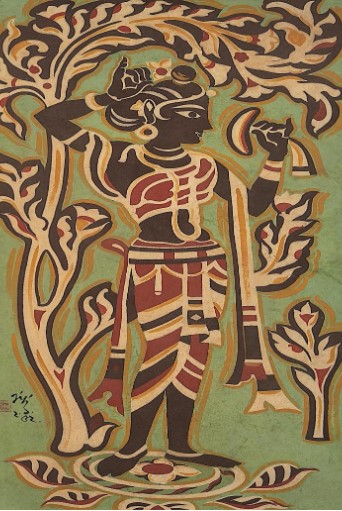
Nandalal Bose was a student of Abanindranath Tagore and considered as one of the most famous modern art pioneers, who had great contributions and fame in contextual modernism. Nandalal Bose was inspired by the morals of the Tagore and the Ajantha family. His famous works include A Lady with a Lotus, A Lady Artist, A Woman Husking, Shahnaiwala, etc.
-
S. H. Raza: (1922 –2016)
S. H. Raza was an Indian artist and one of the members, who laid the foundation of Progress Art Group in Bombay. S. H. Raza went to France in the 1960s and spent the rest of his life in France but he was interested in turning Indian art back to Indian traditions because it was highly influenced by European artistic styles. S. H. Raza’s paintings were based on Abstract Expressionism and Geometric Abstraction. His famous works are Saurashtra, Clocher du Village, Saison I, Ciel Rouge Sur Le Lac, Italian Village etc.

-
Thota Vaikuntam: (1942)
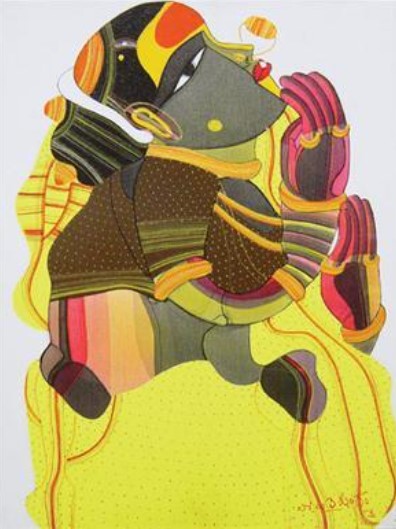
Thota Vaikuntam was a famous Indian artist who contributed the modern Indian art through his paintings. Thota Vaikuntam portrayed the rural life of Indian people in his painting. Thota Vaikuntam mostly painted landscapes, mountains, households of rural people, their way of worshipping in temples, etc. His famous works include Telangana women, Telangana men, Telangana people, etc.
Copyright © IndianArtZone. All rights reserved.